
Graduated Driver Licensing – Youth Assembly Report – March 2026
(Please note that this PDF is designed for printing purposes and has not been remediated for accessibility)
The Youth Assembly was established in June 2021. The current 90 Youth Assembly Members took their seats in November 2025. At the time of recruitment, they were in school years 9-12 which is approximately age 12-16. They are a diverse group. Membership includes young
people from every constituency and recruitment was designed to ensure proportionate representation of Section 75 categories such as gender, religious background, race, care experience, sexuality, disability, and young people with caring responsibilities.
The Youth Assembly was established to perform three functions:
In March 2026, the Youth Assembly was invited to provide evidence to the Committee for Infrastructure on the Department’s proposed regulations to bring Graduated Driver Licensing into operation.
Youth Assembly Members met online with the Clerk and Senior Assistant Clerk on 11 March 2026 to consider the proposals, and this report summarises the views of Youth Assembly Members. Members will give formal evidence to the Committee at their meeting on 25 March 2026.
The Youth Assembly wishes to express their thanks to the Committee and its staff for the opportunity to share their views on this issue.
The Youth Assembly was established in June 2021. The current 90 Youth Assembly Members took their seats in November 2025. At the time of recruitment, they were in school years 9-12 which is approximately age 12-16. They are a diverse group. Membership includes young
people from every constituency and recruitment was designed to ensure proportionate representation of Section 75 categories such as gender, religious background, race, care experience, sexuality, disability, and young people with caring responsibilities.
The Youth Assembly was established to perform three functions:
• To engage with the work of the Northern Ireland Assembly, specifically with Assembly Committees on legislation and inquiries relevant to young people;
• To undertake project work generated by the three Youth Assembly committees; and
• To enable consultation with government Departments and to participate in youth voice projects.
In March 2026, the Youth Assembly was invited to provide evidence to the Committee for Infrastructure on the Department’s proposed regulations to bring Graduated Driver Licensing into operation.
Youth Assembly Members met online with the Clerk and Senior Assistant Clerk on 11 March 2026 to consider the proposals, and this report summarises the views of Youth Assembly Members. Members will give formal evidence to the Committee at their meeting on 25 March 2026.
The Youth Assembly wishes to express their thanks to the Committee and its staff for the opportunity to share their views on this issue.
On Wednesday 11 March 2026, the Youth Assembly met to consider the proposed introduction of Graduated Driver Licensing (GDL) in Northern Ireland, which is currently being scrutinised by the Assembly’s Committee for Infrastructure. There were 37 Youth Assembly Members on the call. Members were able to contribute their views in a number of ways: by speaking during the session, posting comments in the Microsoft Teams chat function, responding to a series of closed questions through a Mentimeter poll, or submitting additional comments by email after the meeting. This approach was designed to ensure that all Members had the opportunity to contribute in a way that suited them.
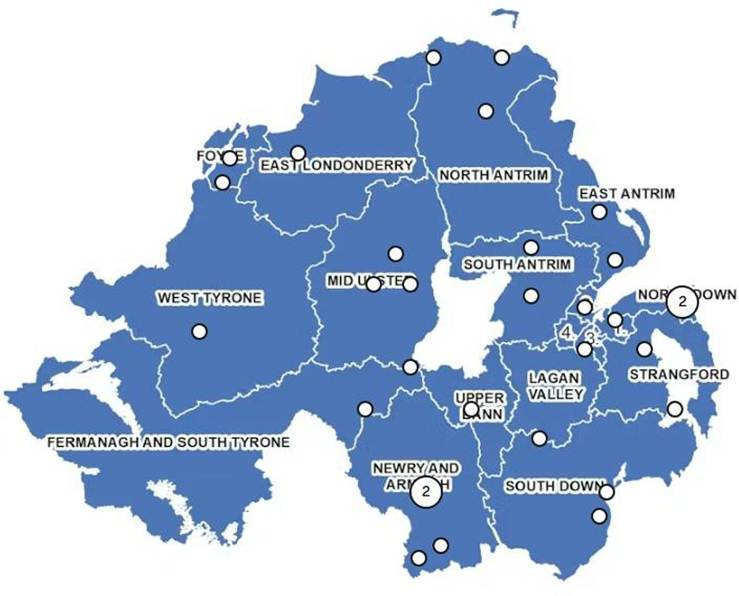
The map below shows that Youth Assembly Members joined the session from across Northern Ireland, reflecting a broad geographical spread. Participants were located in a range of constituencies including Foyle, East Londonderry, North Antrim, East Antrim, South Antrim,
Lagan Valley, Strangford, South Down, Newry and Armagh, Mid Ulster, West Tyrone, and Fermanagh and South Tyrone. This distribution provided the session with perspectives from young people living in a variety of settings, including cities, towns, and rural communities across Northern Ireland.
Members had been provided with a short summary of the proposals in advance of the meeting. This summary is presented in Appendix One. The session began with a brief presentation outlining the proposed changes and explaining the Committee’s role in scrutinising the regulations. Following this introduction, Members were invited to consider each of the key elements of the proposals in turn and share their views on how the measures might operate in practice and what impact they could have on young people.
A Mentimeter quiz was used to support structured discussion, capture anonymous views, and encourage participation from all Members. All questions invited Members to choose between three possible answers: Yes, No, and Unsure.
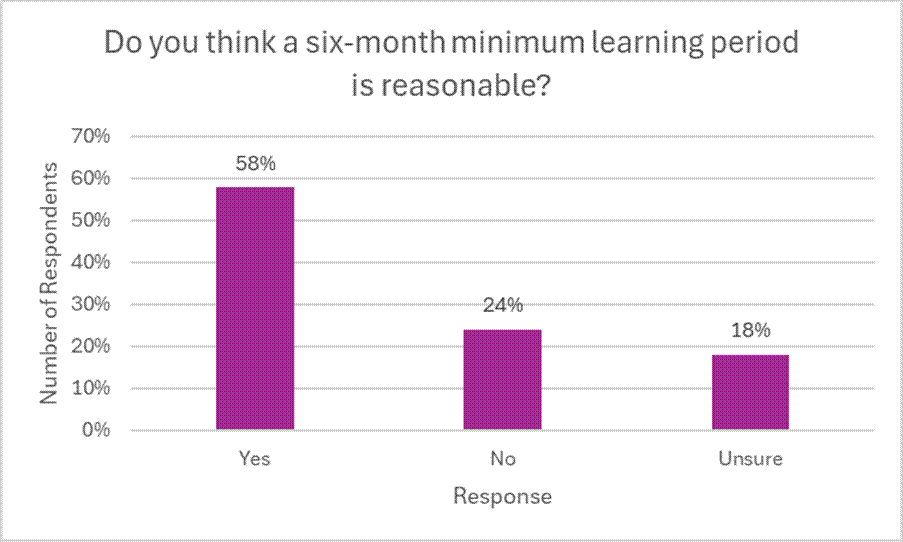
Question 1 asked Members whether they thought a six-month minimum learning period was reasonable. 58% of respondents indicated that they thought it was reasonable. Members who supported the proposal generally felt that a minimum learning period could help to ensure that new drivers gain sufficient experience before driving independently. Members suggested that six months would give learners time to practice a range of driving situations, including driving in different weather conditions, varying traffic levels, and on different types of roads. Members also highlighted that a structured learning period could allow learners to build confidence gradually, practising key skills such as handling the vehicle, understanding road signs, and responding to hazards without feeling rushed to take their test.
24% of respondents voted that they did not think a six-month minimum learning period was reasonable. Members who opposed the proposal raised several concerns, most notably around access to transport, cost, and flexibility for learners who may already feel ready to take their test sooner.
A number of Members highlighted the particular challenges faced by young people living in rural areas, where access to public transport can be limited. One Member explained that for many young people in rural communities, obtaining a driving licence quickly is often essential for accessing education, work, or social activities. They noted that some young people in these areas may already have experience driving vehicles such as tractors or quads from the age of sixteen and may therefore already have a strong understanding of the rules of the road. Others felt that the proposed six-month requirement could be too restrictive, particularly for learners who feel ready to take their test sooner. One Member commented that while they generally support measures that improve safety, they felt that six months may be slightly too long and that learners should have more choice about when they are ready to take their test.
Several Members also raised concerns about the financial impact of extending the learning period. Driving lessons were frequently cited as expensive, with one Member noting that lessons can cost around £40 per session, which could place a significant burden on families if learners are required to continue lessons for a longer period. One Member questioned how effective the policy would be in Northern Ireland, noting that while similar systems operate in other countries such as Canada, the evidence on their effectiveness can vary and may depend on how they are implemented.
Finally, 18% of respondents indicated that they were unsure about whether a six-month minimum learning period was reasonable. Members who selected “unsure” recognised both the potential benefits and drawbacks of introducing a mandatory learning period. Some reflected that while a six-month period could help ensure that learners have sufficient time to develop their skills and confidence, it could also create challenges for those who need to obtain a licence more quickly for practical reasons such as employment.
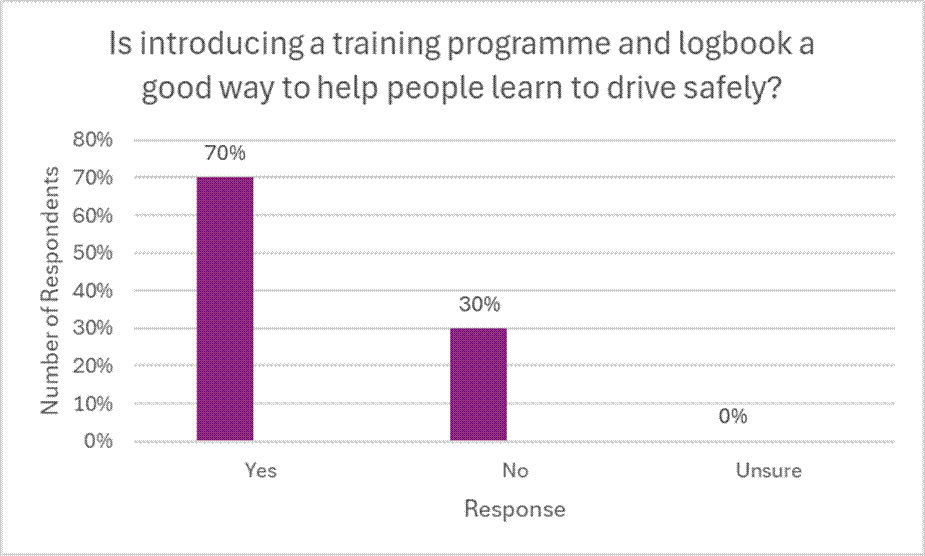
The next question asked Members whether introducing a training programme and logbook was a good way to help people learn to drive safely. None of the respondents selected ‘unsure’ in response to this question. 70% of Members responded ‘yes.’ Members who supported this proposal generally felt that a structured training programme could help ensure that learners cover a wide range of important driving skills before taking their test. In the session, Members were informed that the programme would include a series of modules covering areas such as risk awareness, driving in different conditions, and road sharing, which helped provide some context for their responses. One Member suggested that one benefit of the approach could be helping learners practise driving in a structured way without necessarily requiring additional paid lessons for every stage, which could help keep the overall cost of learning to drive lower.
30% of Members responded ‘no’. Members who expressed reservations about the proposal tended to focus on how the system would operate in practice, particularly the possibility that the logbook could be signed off without learners fully completing the training modules. Some Members suggested that allowing verification by parents or other qualified drivers could create opportunities for the system to be misused, for example if individuals were willing to sign off modules without the learner having genuinely completed them. They felt that this could undermine the purpose of the training programme. There were also questions about how certain elements of the programme would work in practice, including why some modules, such as motorway driving, would be optional rather than mandatory, particularly given its perceived importance for road safety.
One Member noted that, as someone who had recently received their provisional licence, some of the proposed requirements could potentially be too restrictive and may need to be reviewed to ensure they remain practical for learners.
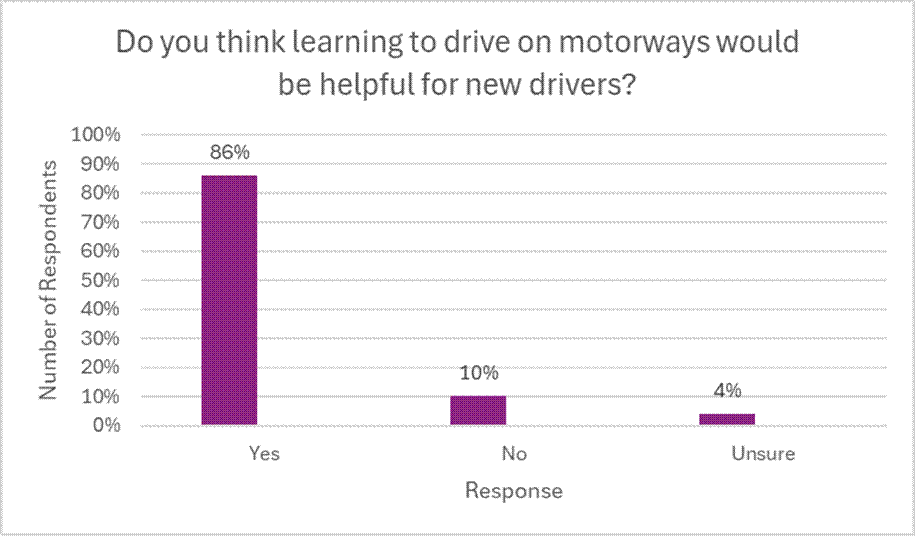
Members were asked whether they thought learning to drive on motorways would be helpful for new drivers. The majority of respondents were supportive of the proposal, with 86% voting ‘yes’, 10% voting ‘no’, and 4% indicating that they were unsure.
Members who supported the proposal generally felt that motorway driving was an important skill for new drivers to develop before driving independently. Several commented that gaining experience of motorway driving during the learning stage could help build confidence and reduce anxiety when encountering these roads for the first time after passing their test. One Member described motorway driving as “an essential learning experience,” while another noted that learning to drive on motorways could help develop “important skills” and improve confidence for younger drivers. Others highlighted safety considerations, with one Member noting that because many accidents occur on motorways, it was important that new drivers understand how to drive safely in these environments before driving alone.
A small number of Members expressed reservations about the proposal. Some felt that motorway driving could present additional risks for inexperienced drivers, even when accompanied by an instructor. One Member noted that learner drivers can sometimes stall or struggle with vehicle control, which could potentially create hazards in faster-moving motorway traffic. Others questioned whether motorway training was essential, pointing out that previous generations of drivers learned without it. In addition, some Members suggested that the training programme might also benefit from including other real-world driving scenarios, such as driving on narrow rural roads or “dodgy” roads, which they felt could be equally challenging for learner drivers. Overall, however, the responses suggested strong support among Members for including motorway driving as part of the learning experience.
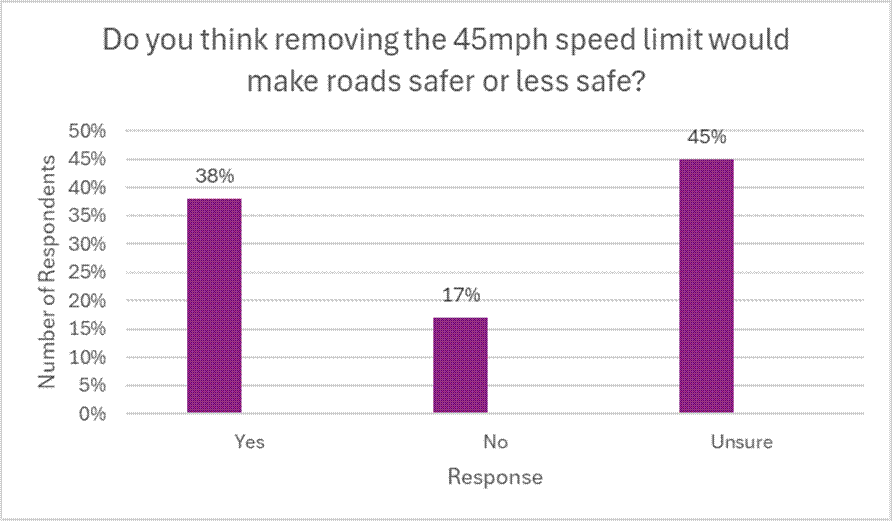
Members were asked whether they thought removing the current 45 mph speed limit for learner and newly qualified drivers would make roads safer or less safe. During the session it became clear that the wording of the question was unclear. Members discussed this briefly and agreed that a ‘yes’ response should be interpreted as meaning roads would become safer if the limit were removed, while a ‘no’ response indicated that removing the limit would make roads less safe. Responses were mixed, with 38% voting ‘yes’, 17% voting ‘no’, and 45% indicating that they were unsure.
Members who believed removing the limit could make roads safer often focused on the difference between learner driving speeds and the speed of surrounding traffic. Some Members suggested that being forced to drive significantly slower than other vehicles could create risks, particularly where other drivers may attempt to overtake. One Member commented that “being forced to drive slower than the rest of the traffic makes it more dangerous,” while another noted that learning to drive at normal road speeds could help reduce the sudden adjustment learners face after passing their test. One participant suggested that practising at higher speeds before passing the test could help drivers become more comfortable and less likely to have accidents when they later drive independently.
However, other Members felt that the 45 mph limit may play an important role in encouraging caution among inexperienced drivers. Some participants referred to statistics on road safety during the discussion, noting that between 2019 and 2023, 297 people were killed in speed-related incidents, with speed identified as a significant contributing factor. Members also highlighted that young drivers aged 16–24 are disproportionately involved in speed-related collisions, which reinforced concerns about removing a restriction designed to limit speed during the early stages of driving. One Member suggested that maintaining the limit during the learning period could help reduce risks for drivers who are still gaining experience.
The high proportion of Members selecting “unsure” reflected this sense of uncertainty and competing considerations. Several Members commented that the safety implications may depend on factors such as how long someone has been learning to drive, how comfortable they are with higher speeds, and how other drivers respond to learner vehicles on the road.
Others highlighted that the issue involved balancing different safety considerations, with one Member describing the situation as “50/50”: while slower speeds might encourage overtaking and frustration from other drivers, higher speeds could increase risks for those with limited driving experience. Overall, the discussion suggested that Members recognised both potential advantages and disadvantages of removing the 45 mph restriction.
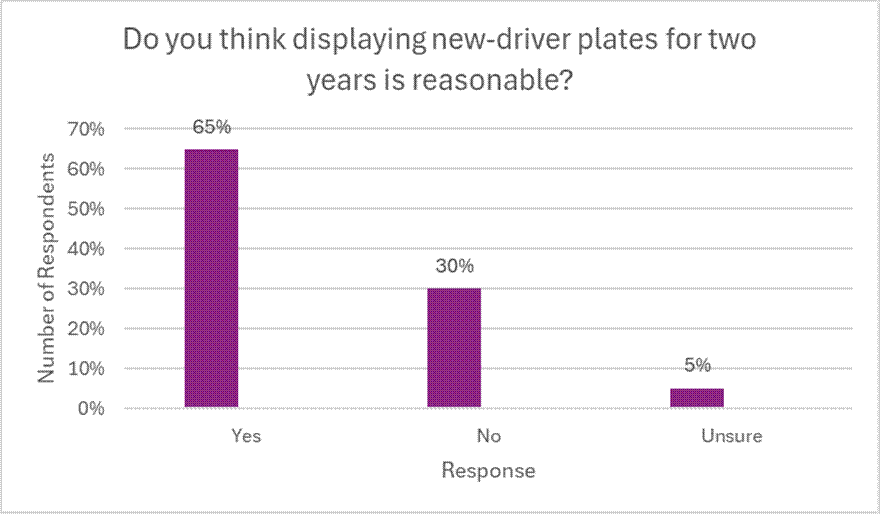
Members were asked whether they thought displaying new-driver plates for two years after passing the driving test would be reasonable. A majority of respondents were supportive of the proposal, with 65% voting ‘yes’, 30% voting ‘no’, and 5% indicating that they were unsure.
Members who supported the proposal generally felt that displaying new-driver plates for a longer period could help other road users recognise that a driver is still relatively inexperienced, which may encourage more patience and caution on the road. Some participants suggested that it can take more than a year for new drivers to fully develop confidence and experience, and that a two-year period could therefore better reflect the reality of the early stages of driving.
However, a number of Members expressed concerns about the potential negative impact of displaying plates for a longer period. One Member commented that one year already feels sufficient and that displaying plates for longer could lead to drivers feeling singled out or treated differently by other road users. They suggested that extended use of plates could “lead to discrimination on the road” and isolate newer drivers. One Member questioned whether two years was necessary, particularly given that the proposal includes different plates for the first six months and the following eighteen months, suggesting that the overall period might feel excessive if the plate design already changes during that time. This highlighted the potential financial implications associated with requiring additional resources during the learning and newly qualified driver period.
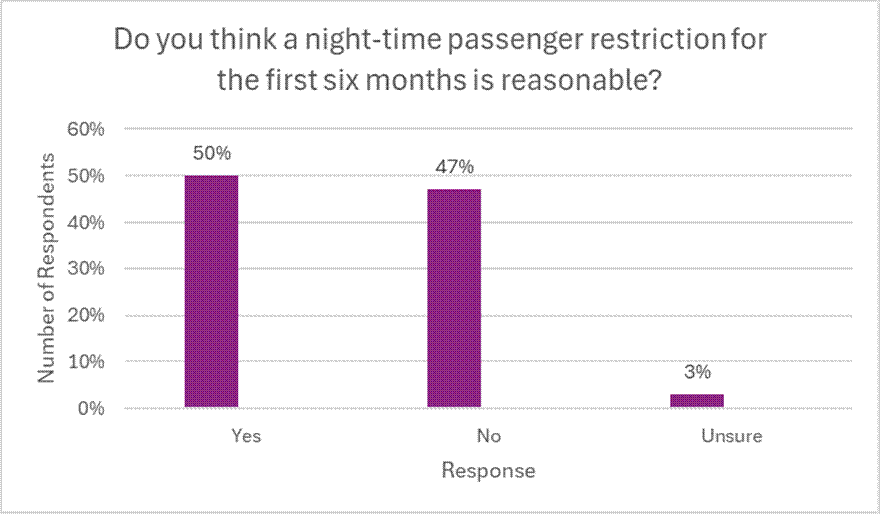
Members were asked whether they thought introducing a night-time passenger restriction for the first six months after passing the driving test would be reasonable. Responses were closely divided, with 50% voting ‘yes’, 47% voting ‘no’, and 3% indicating that they were unsure.
Members who supported the proposal often felt that limiting passengers could help reduce distractions for inexperienced drivers, particularly during late-night hours when fatigue or social pressures may be greater. Some suggested that the restriction could help discourage risky behaviour or situations where young drivers might feel pressure to transport multiple friends. One Member commented that the measure could potentially help prevent drink-driving, while another noted that although the policy might have some downsides, it could reduce distractions in the car during the early months of independent driving.
However, many Members raised concerns about the practical implications of the restriction. Several commented that in their experience it is common for young people to drive friends home from social activities or gatherings, particularly where parents may not be available to collect them late at night. One Member noted that restricting the number of passengers could lead to more cars on the road, as groups of friends might need to travel separately rather than together, which some felt could have implications for traffic levels and the environment.
Others questioned how the rule would operate in everyday scenarios, such as when a driver begins a journey before 11pm but continues driving after the restriction begins.
Members also raised questions about how the rule would be enforced in practice, including how authorities would determine whether passengers are immediate family members or how the rule would apply in situations involving shared vehicles, caring responsibilities, or medical emergencies. In particular, some Members highlighted that the proposal may have different impacts on young people from Section 75 groups, including those with disabilities, young carers, or young parents, who may rely more heavily on shared transport or lifts from others.
Some Members therefore felt that while the intention of improving safety was understandable, the proposal could create practical and potentially unequal challenges for young people in social, work, and family situations.
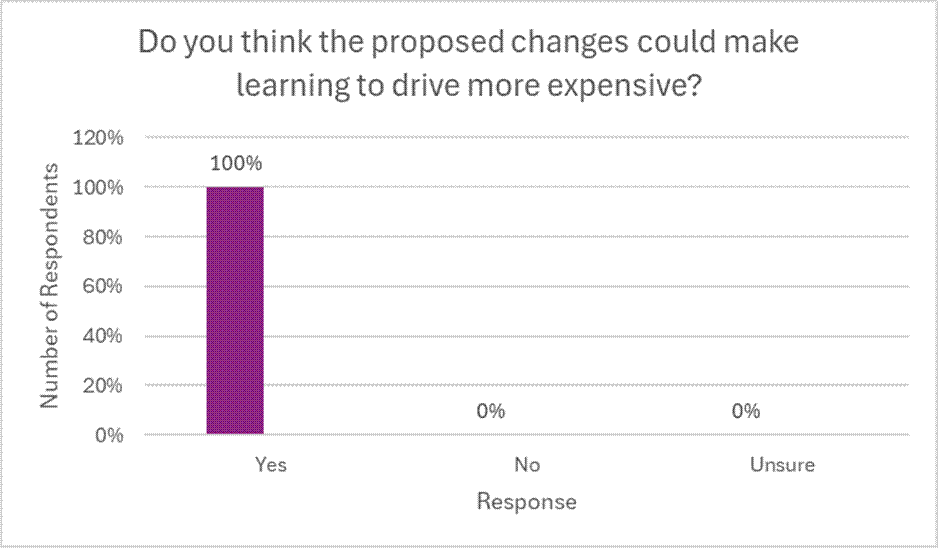
Members were asked whether they thought the proposed changes could make learning to drive more expensive. There was unanimous agreement among respondents, with 100% voting ‘yes’. Members pointed to several aspects of the proposals that they believed could increase costs for learners, including the six-month mandatory learning period, which some felt could lead learners to take more driving lessons over a longer period of time. Several Members also referred to the additional elements of the proposed system, such as the learner logbook and the requirement for different new-driver plates, which they believed could add further costs.
One Member summarised this by noting that “cost in the logbook, extra lessons, and new different plates” could all contribute to making learning to drive more expensive.
Some Members also raised concerns about the cost of driving instructors, suggesting that lesson prices could increase if learners are required to learn over a longer timeframe. Others noted that learners may feel pressure to take additional lessons in order to feel fully prepared for the test. While it was acknowledged during the discussion that the Department has indicated that improved road safety could lead to lower insurance premiums over time, Members generally felt that any such benefits were uncertain and unlikely to offset the more immediate and tangible increase in upfront costs for learners.
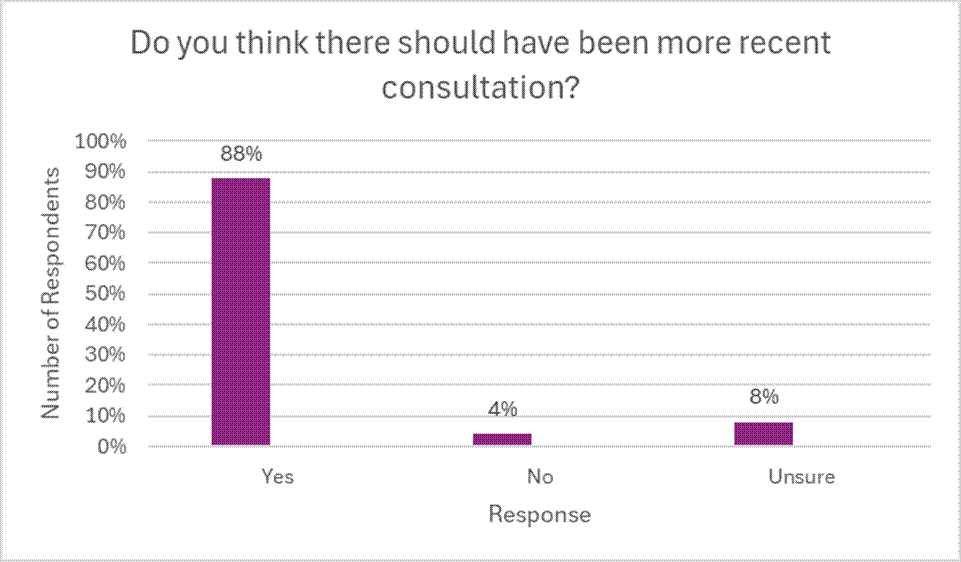
Members were asked whether they thought there should have been more recent consultation on the proposed introduction of Graduated Driver Licensing. A strong majority supported this view, with 88% voting ‘yes’, 4% voting ‘no’, and 8% indicating that they were unsure.
Many Members felt that the original consultation period, which largely took place between 2011 and 2018, was now somewhat outdated and that newer evidence and perspectives should be considered before implementing the proposals. Some pointed to changes in circumstances over recent years, including the cost-of-living crisis and rising fuel prices, as reasons why updated consultation might be beneficial. Others noted that more recent data could provide a clearer understanding of current road safety trends and the experiences of young drivers today. Members also highlighted that many of those currently affected by the proposals were either not yet born or were very young at the time of the original consultation and therefore had not had the opportunity to contribute their views. One Member suggested that consulting from 2024 onwards using the most recent available evidence could make it easier for policymakers to make well-informed decisions.
Several Members also highlighted that many young people who would be directly affected by the policy may not have had the opportunity to contribute to earlier consultations. One participant commented that they had not even been born when the earliest consultation took place, emphasising the importance of ensuring that current learners and young drivers are able to share their views. In this context, Members also noted that a full Child Rights Impact Assessment (CRIA) does not appear to have been undertaken and suggested that such an assessment could be important in understanding how the proposals may affect children and young people specifically. However, a small number of Members felt that the existing
consultation was still relatively recent and that its evidence remained valid.
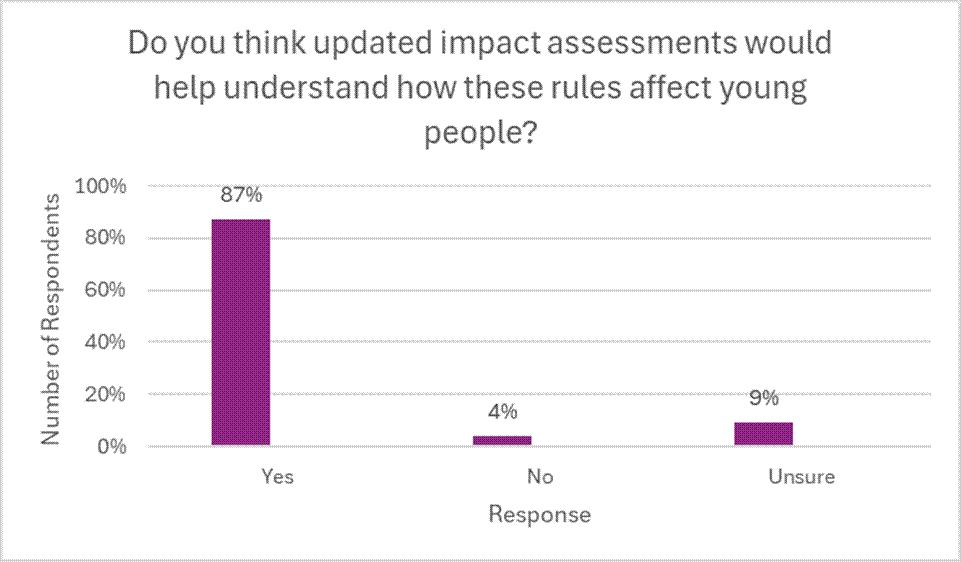
Members were asked whether they thought updated impact assessments would help to better understand how the proposed changes might affect young people today. A strong majority supported this view, with 87% voting ‘yes’, 4% voting ‘no’, and 9% indicating that they were unsure.
Members who supported updated impact assessments generally felt that they would help ensure that policymakers have up-to-date evidence about how the proposals could affect young people in practice, particularly given the length of time since earlier screening work was carried out. Several Members noted that this could help identify how the measures might affect different groups of young people, including those living in rural areas, those who rely on driving for work or education, those with disabilities or those with caring responsibilities.
Overall, responses suggested that many Members felt that updated impact assessments could help ensure the proposals are fair, proportionate, and responsive to the current experiences of young drivers.
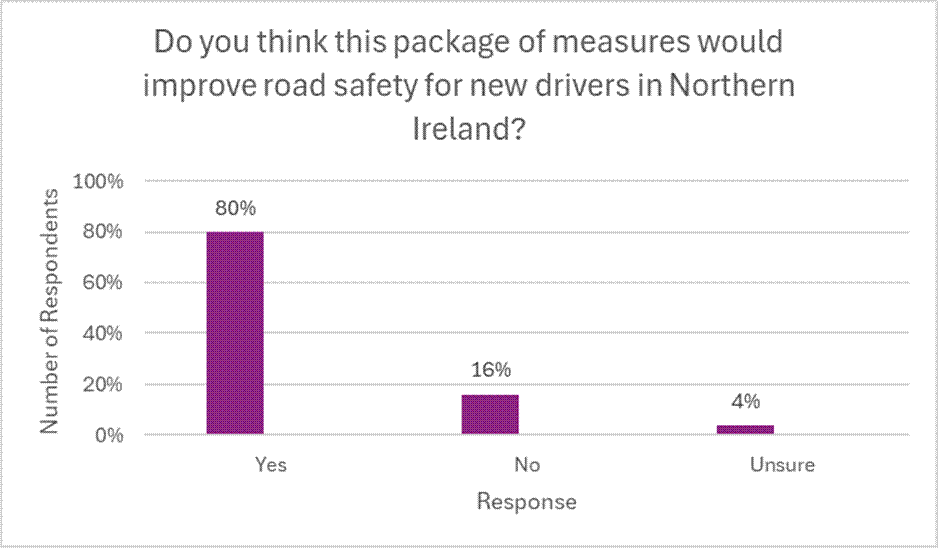
Finally, Members were asked whether they thought the overall package of measures would improve road safety for new drivers in Northern Ireland. Members were also invited to share any additional comments or points they had not yet had the opportunity to raise. Overall, 80% of respondents voted ‘yes’, 16% voted ‘no’, and 4% indicated that they were unsure.
Members who supported the proposals generally felt that the combined measures, including the learning period, structured training programme, and other restrictions, could help ensure that new drivers are better prepared and more aware of risks before driving independently.
Some participants also suggested that improving road safety may require additional education and awareness initiatives alongside the proposed measures. One Member referred to a recent road safety event in their school where the PSNI, fire service and ambulance service demonstrated the consequences of a road traffic collision. They suggested that experiences like this could be particularly impactful and that similar initiatives could potentially be introduced more widely in schools to help young people understand the risks associated with unsafe driving. One Member further suggested that this type of learning could be embedded within the school curriculum. This suggestion is timely as the Department of Education is currently reviewing the Northern Ireland Curriculum. Another Member commented that the government might also consider doing more to help young people understand the real-life consequences of dangerous driving, such as improving education and awareness initiatives.
The responses from Youth Assembly Members demonstrated strong engagement with the proposed introduction of Graduated Driver Licensing. Members recognised the importance of improving road safety, particularly for younger and newly qualified drivers, and generally supported elements of the proposals that could help learners gain experience gradually and build confidence before driving independently.
At the same time, Members highlighted a number of practical issues that they believe policymakers should consider as the proposals progress. These included the potential
financial impact of learning to drive, the practical implications of passenger restrictions, and the importance of ensuring that policies reflect the realities faced by young people in rural areas or those relying on driving for work or education.
Members also emphasised the value of up-to-date consultation and evidence, noting that many of those who will be affected by the proposals today may not have had the opportunity to contribute to earlier consultations. In addition, some Members raised questions about how the success of the new regulations would be measured in practice, and how policymakers would know whether the changes are effectively improving road safety for young drivers over time.
The Youth Assembly hopes that the views captured in this report will assist the Committee for Infrastructure in its scrutiny of the proposed regulations. In particular, Members highlighted the importance of considering how the proposals may affect different groups of young people, including those with caring responsibilities, disabilities, or other additional needs, and ensuring that their experiences are reflected in decision-making. Youth Assembly Members welcome the opportunity to contribute to this process and look forward to sharing their perspectives further when they give evidence to the Committee.
Appendix One – Youth Assembly Summary of Graduated Driver Licensing